Beltane lessons
from the garden on May Day

But first, briefly…
I am so excited to be leading a one day writing workshop in the magical space that is the Heeled In walled garden at the Oldlands estate in Monmouth. Marianne was one of the creative powerhouses behind the groundbreaking and impactful Wolves Lane Flowers in London, which reimagined flower farming at scale in an urban space, and she is now growing, alongside a young family, a beautiful new garden project in the valleys of Wales. It is all being so thoughtfully and tenderly done, and you can and should read all about it on her website and follow along on Instagram. And if you can, do subscribe to her monthly letters – real physical ones, that drop through the letterbox once a month in bright envelopes with themed stamps and her actual handwriting on the page – which are so delightful to receive.
We will be in the garden, and writing with the support of this beautiful space. I’ve called the workshop Rewriting Inner Landscapes, because that is what I hope we will do – use the special outer landscape of the garden to help tap into our inner landscapes, and unearth the stories that lie there. We will explore together how this process of noticing how inner and outer landscape reciprocally shape each other, also shapes the stories that we tell. And we will use our senses to feel into place – external and internal – in order to open up our writing into spaces lush and vibrant and alive and new. It would be a delight to write with you there.
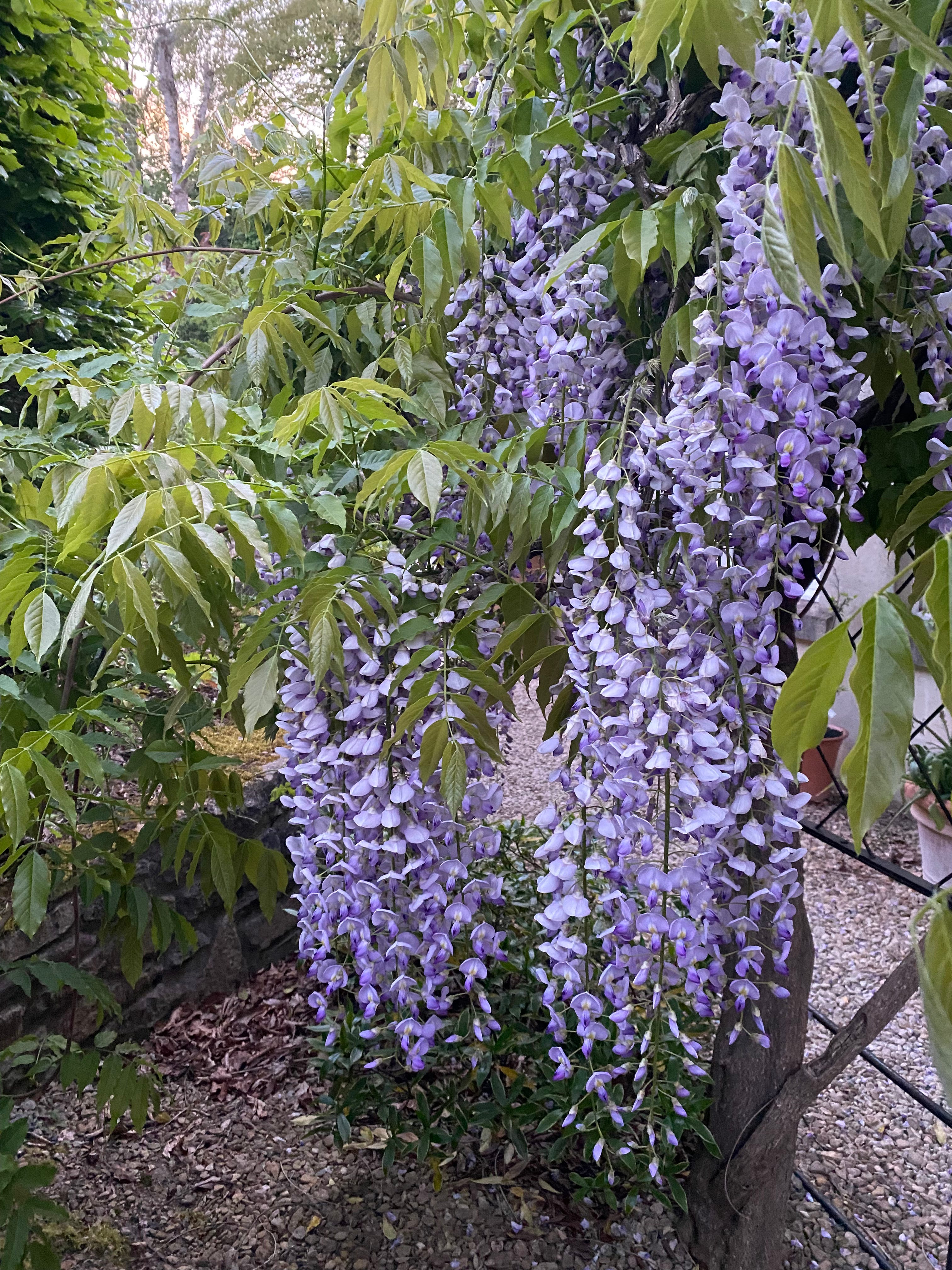
My fingers are rough on the keyboard as I write this, dirt lodged deep under my fingernails. No amount of scrubbing that I do seems to get them smooth and clean at the moment, and I will be digging in the soil again soon, so it hardly seems worth the effort. They remind me of roots, these muddy, gnarled digits of mine, not the delicate new growth, tender and reaching, seeking the damp that lies under the surface after these last dry weeks, but rather the woody, sturdy old growth that anchors a long-lived plant in place.
That is me, after six years here, a bit callused and weathered from the knocks of living, but yet it seems firmly anchored in this place by my hands, rooted deeply into this soil. The tender edges of myself still reaching, still seeking out a nourishing life from this place that holds me. The plants remind me that spring is the time to show up bravely in the world. To venture forth all tender and new. The aphids will come; the slugs too. A late, unexpected frost. A drying wind from the east, a sudden, scorchingly hot day. So far this has been a sunny spring, but too dry, following a winter mild but too wet. The plants have to adapt to these ever-changing, increasingly harsh conditions of living, become hardy to them while still pushing forth vulnerable new growth into the world, or die. Their resilience humbles me. It is the most hopeful act.
It is easy to romanticise this time of blossom and lush beginnings, so alluring after the almost forgotten dull months of winter grey and wet. But all this beauty in the world does not come without extreme hazard, without great care and hard work. It comes in spite of it. The plants risk the vulnerability of life. And despite the risk of perhaps too easily romanticising it all, their persistent determination in pushing through the great confusion and danger this time of climate chaos brings for them feels like a triumph. The rapidly lush greening and blooming of the garden feels like a display of the necessary and life-giving power of sheer exuberant joy.
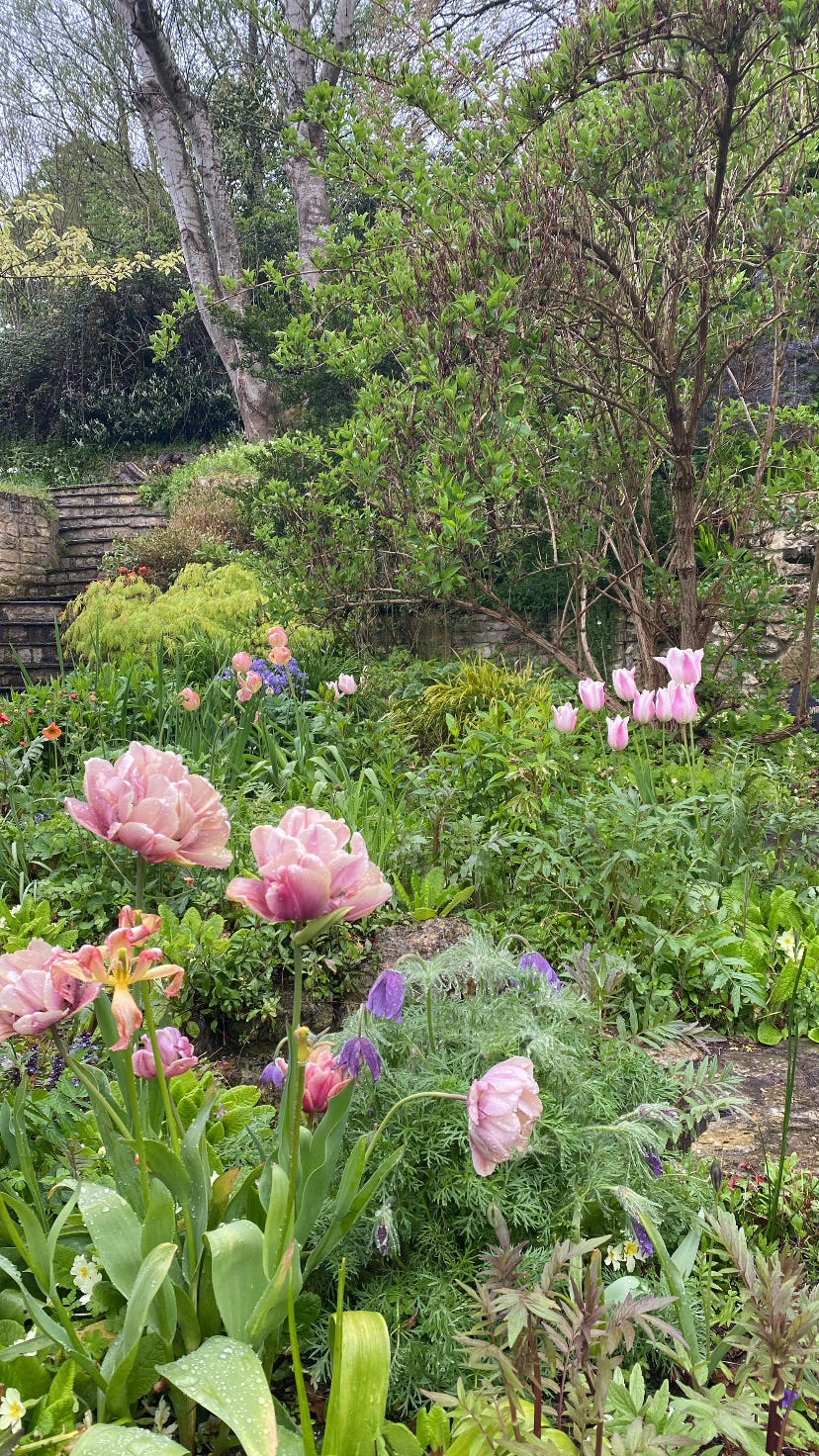
We have finally invested in a comfortable garden sofa, and sitting low in it gazing up at the garden the plants seem to float over the garden terraces as they rise above the house, like the way that ballerinas appear to simply step gracefully into mid-air. From this angle they make it all look effortless. Solar-powered by the recent sunny weather, I have been gardening endlessly in a rush of energy over these last few bright sunny weeks. It has been a joy to do so, and satisfyingly the garden looks good, but feels so much better for my presence in it. We host a committee meeting of the local Horticultural Society in it at dusk one warm evening and people kindly gush and coo over how beautiful it all looks. But looking down on the beds the work is visible. Those who know can see all the seams, can hear the grunt of the dancer before they are airborne.
Perhaps this in itself is gratifying. The visible evidence of my and the plants collective effort in this age of artifice and AI. I garden this space – there is an ancient and enduring truth to this relational act. There is just my human body, and the soil with its trillions of living bodies, and their call, and the tenderness in my heart when it cracks open to listen.
I am writing this to you from the garden. Because in the garden is the only place I want to be in these times. Its generosity teaches me everything that I need to know, evokes from me everything that I need to be. It soothes and comforts me, but also rightly disturbs me when I truly listen. With the technology of our time I sit in my garden and hear of the blockade of the Strait of Hormuz, how the blocked flow of gas and oil has lessened the production of fertilisers, how those in the already most stricken countries on the continent of Africa will be hardest hit by the reduction in their ability to produce food. Those countries are stricken because they were exploited and extracted from by the ones who now make the fertilisers, who continue to get rich off the fossil fuels which drive the climate crises that bring flooding and drought and increased difficulty for those who seek nourishment from these lands. The people in these countries are poor as their soils are poor because they were stripped of their native life, farmed and mined and trafficked and bombed and poisoned for the profit of those who now play the mindless power games that continues to make their life even harder. The tangled net of generations of extraction strangles ever more tightly.
I run the rich soil of my garden through my fingers as I think of the words of Robin Wall Kimmerer, who tells us to go raise a garden as we raise a ruckus, seeing both of these as the most radical, loving and powerful actions that we can take against all the inhumanity of our time. When we plant our fingers in a garden we immerse ourselves in the reciprocal web of the creativity of life. The plants wash our eyes clear with the potent dew of morning so that we see the entangled connections around us. The dirt under our nails gives us the strength to combat the threat of overwhelming feelings of hopelessness and woe. The plants’ sweet and bitter juices coat our throats so that we may raise our voices in resistance against the rising tide of all that is anti-life.
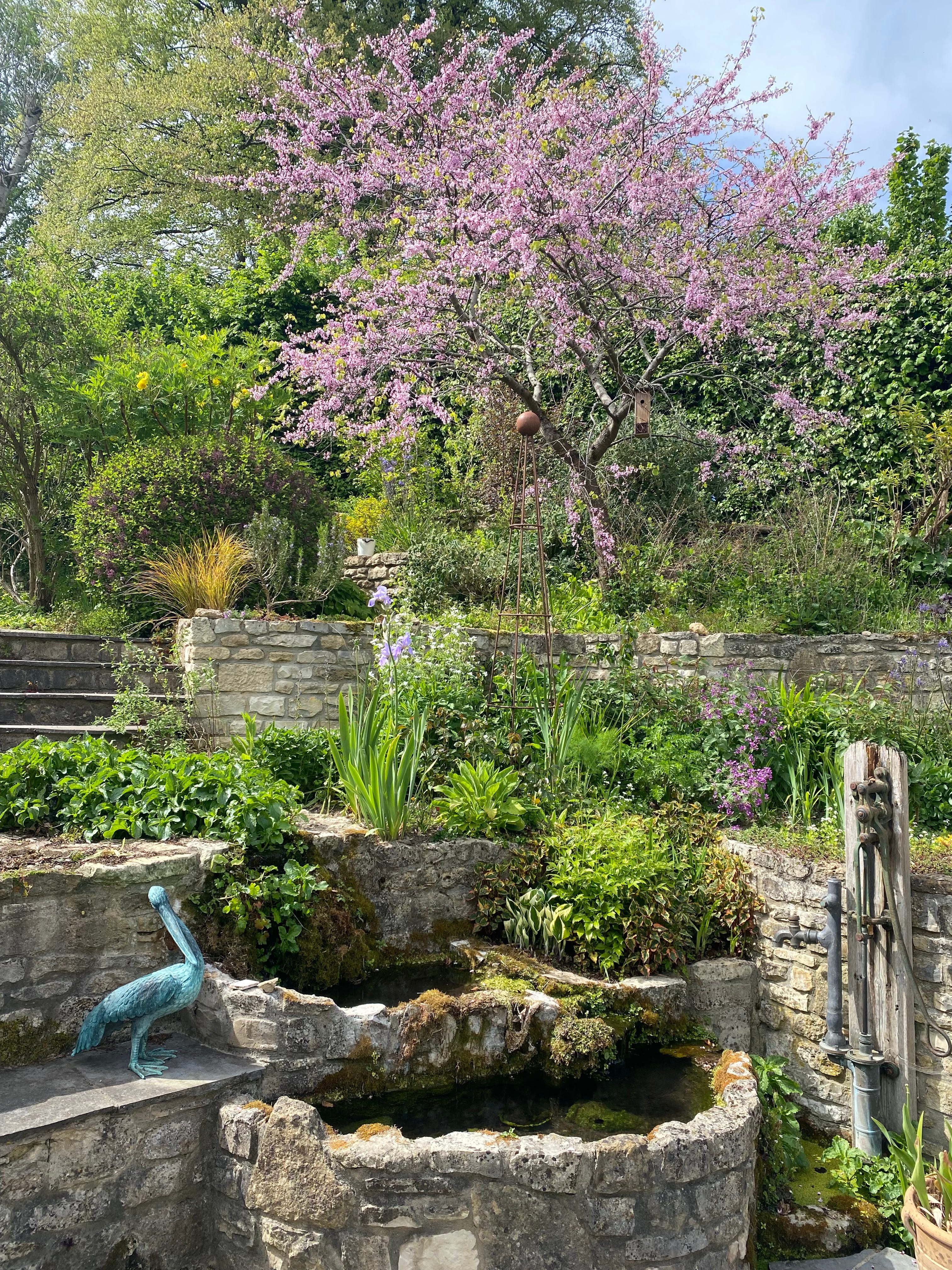
Life gets in my way and I spend a morning away from the garden. For that time I am indoors at my laptop, doing a different sort of tending to our lives, addressing necessary but tedious admin; laptop, calendar & papers sprawled across my desk. But the weather is glorious & the call of the garden is so strong that for every email I send and form that I complete I must resist it. By the time I shut the laptop, harder than I intend, I am frazzled, nerves exhausted and frayed. I hurry unseeing outside. Then turn back, rapidly retracing my steps to attend to a job that I forgot earlier in the morning, all the while thinking of seedlings and hoping they are not fried in the intense heat that developed since breakfast. As I rush along the path I feel a rubbery give beneath my heel which halts my breath, and stops me.
There on the path beside my feet is a slow worm, writhing in agony. How did I not notice it? It wasn’t there when I first headed the other way – was it? I love the slow worms that the garden holds, and had been marvelling over one with my daughter as it sunned itself in a garden bed just days before. Was this the same one? It seems different, larger. My heart retracts in my chest as I watch it squirm, its movement clearly impaired at the spot that bears the visible mark of my weight. Such damage I have enacted in my thoughtless hurry, my human rush to do the task, to perform, to achieve the ticking off of the to do list, always against the clock. What harm by not pausing a moment, taking a breath at that threshold between inside and out to recalibrate myself to the pace of the garden. To notice what is around me. A priceless lesson relearned at another creature’s painful, deadly expense.
I stand mournfully by the creature for a while until it seems apparent that my ongoing presence is causing terror in addition to pain. I move away, sick with the consequence of my carelessness, unable to do anything other than hold this part of my reality which would be too tempting to deny – my role in the garden as an agent of death.
We have been clearing new space in the garden. My husband dug out the last of the dense evergreen plantings, and we stood together and surveyed the new space. This kind of clearing feels a destructive act to me, and one that I always put off, thinking it better to hold on to the life that already exists. As we stand and look at what lay in the wake of the box’s death, it felt like a whole landscape had opened up, somehow both smaller but still more expansive than it had previously appeared. Before we dug out the caterpillar-riddled box, we had considered replacing them almost like-for-like with small balls of yew, researching a cultivar that would not be constantly trying to grow into a massive tree. But when faced with the actual new vista, the space seemed to ask for different possibilities.
‘I think this would be a good place for a flowering shrub.’
‘Yes, and then we could put a fruit tree in that patch over there, where it would be easy to harvest from.’
‘Whatever goes here, it has to be heavily scented.’
‘It will be beautiful.’
The ugly gap that temporarily remains suddenly serves a necessary lesson from this place that is always generously teaching me the things I need to be reminded about myself. Making the effort to dig out the old diseased parts that have been growing in our inner landscapes creates space for something new. For fresh growth and different possibilities. Perhaps for the divinely transient beauty of a shrub in early summer exuberantly covered in sweetly smelling blossom, dense with humming insects. There is such life in that.
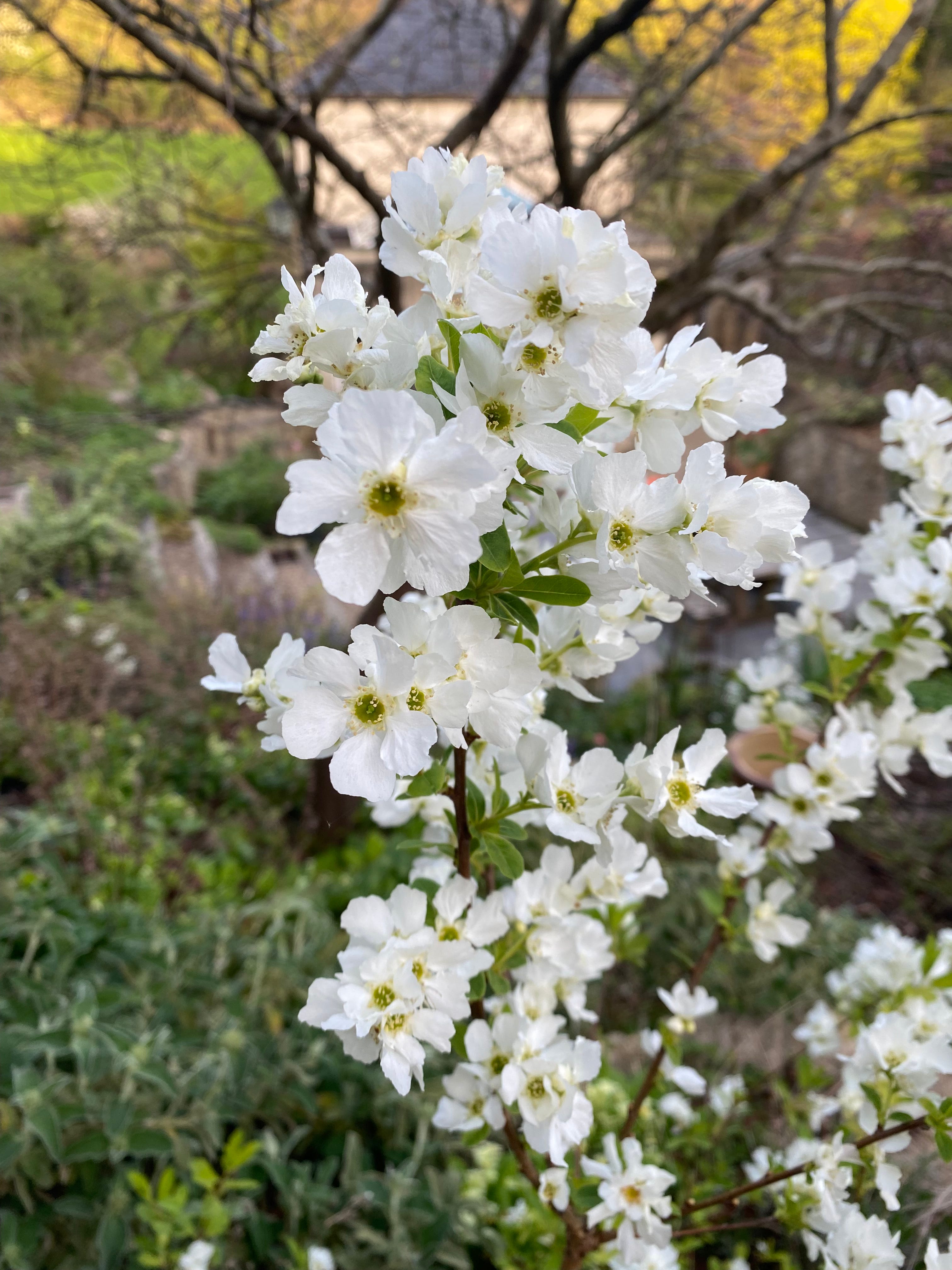
Soon I will be leaving this garden for a little while. I will be visiting Marianne’s for my own version of Gardening Leave tucked in around the workshop that we’ll be doing there. Sometimes when we notice ourselves being drawn to old habits in our usual place, a visit to a different one can reset the balance. I have found myself reflected in profound and deeply inspiring ways in other gardens, ways that have changed how I see myself in the world. I am better for it. So the blessing of a visit to this special place of Marianne’s, where the paths are sinuous and the planting biodiverse, and designed to make you slow down, draw breath and notice, could not be more timely, and much needed.
Happy Beltane, friends. It is May Day. Mayday? Like the call for help when everything’s going to disaster, asks my daughter? Not that one, I reply. But maybe, in these times… maybe that one indeed. The froth of hawthorn is resplendent in the hedges right on time. Every morning I wake to the valley ringing with birdsong. The scent of wisteria and lily of the valley hang over the garden on still warm afternoons like velvet. Summer will soon be upon us, the new seeds we have sown will blossom and bear fruit in our lives. May is nearly our last chance to sow seeds that will bear harvest in this growing season. A good time to review all that we nurture in our lives, to dig deep, and root out, and throw that which we no longer need onto tonight’s Beltane fires.
So much woven into this beautiful piece.
Absolutely beautiful Marcie, as always ❤️